
How AI Models Choose Sources: The 2026 Guide to Citations
Learn how AI models like ChatGPT and Perplexity select sources in 2026. This guide explores Answer Engine Optimization (AEO) and the RAG process to help your brand earn more citations and visibility in AI search results.

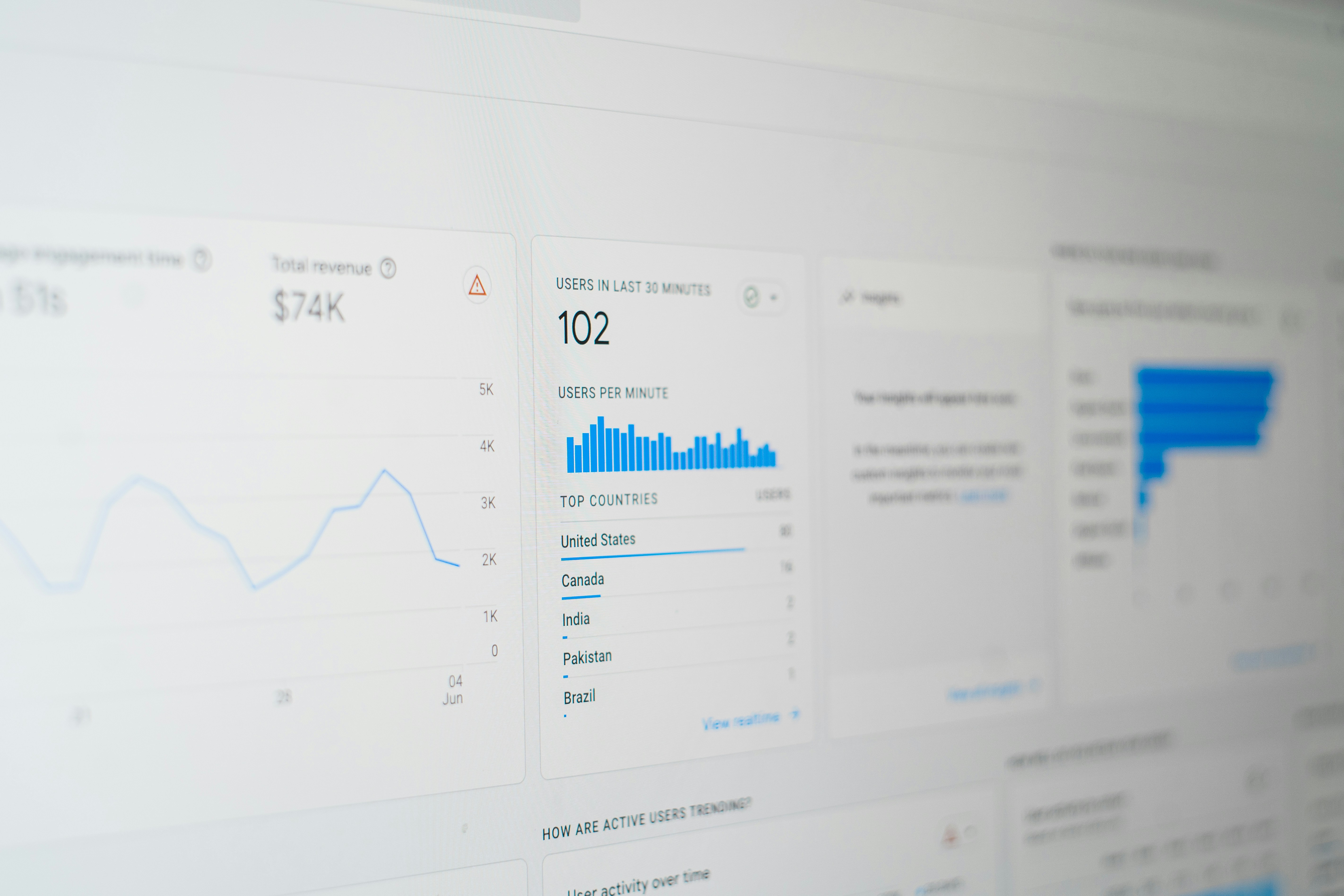
In 2026, the "Selection Gap" has become the defining challenge for digital marketers. According to recent data, only 12% of URLs cited by AI search engines rank in Google's top 10 for the same query (Pro AI Search, 2026). This massive disconnect reveals a hard truth: optimizing for traditional search engines no longer guarantees visibility in the AI era.
With ChatGPT reaching 900 million weekly active users (Cintra, 2026) and 60% of all searches now ending without a single click to a website (Omni Incite, 2026), the shift from "ranking links" to "referencing evidence" is complete. For marketers, this has birthed the discipline of Answer Engine Optimization (AEO). To succeed, brands must understand exactly how AI models select sources and why certain pages are ignored. As an end-to-end AI search optimization platform, ChatFeatured helps brands navigate this exact challenge by tracking and optimizing how AI models discover and cite their content.
What is AI Search Optimization (AEO)?
AI search optimization, or Answer Engine Optimization (AEO), is the practice of structuring digital content so that artificial intelligence models—such as ChatGPT, Perplexity, Gemini, and Claude—preferentially retrieve and cite it when generating answers for users. Unlike traditional SEO, which focuses on keyword density and backlinks to rank pages, AEO focuses on semantic density, entity authority, and direct answer formatting to earn citations.
How Retrieval-Augmented Generation (RAG) Works
AI models like ChatGPT, Gemini, and Perplexity use a framework called Retrieval-Augmented Generation (RAG) to cite sources. This is a two-stage process that marketers must optimize for separately:
Stage 1: Retrieval (The Candidate Set). When a user asks a question, the system searches its index for relevant "chunks" of text. If your content is not semantically relevant or technically accessible, it never enters the candidate set.
Stage 2: Generation (The Citation Decision). The language model reads the candidate chunks and decides which ones are trustworthy enough to ground its answer.
As noted in a 2026 analysis on reverse-engineering AI citations (Surferstack, 2026), AI overviews do not ask "Who ranked first?" They ask "Who explained this best?" Models prioritize clarity, trust, and explainability over traditional domain authority.
The 5 Pillars of AI Citation Selection
To bridge the Selection Gap, marketers must align their content with the five technical and strategic pillars AI models use to select sources.
1. Retrieval and Semantic Relevance
AI models do not match keywords; they match intent vectors. Content that leads with a direct, bolded answer of 40 to 60 words has a 340% higher citation probability than content that buries the lead (Athenic, 2026). This "Answer-First" rule is critical for AI extraction. Furthermore, models prefer information-dense chunks. A page that explains exactly how a product works with specific technical specifications will be retrieved over a generic, high-level marketing page.
2. Authority and The Entity Threshold
In 2026, authority has shifted from backlink counts to Entity Recognition. If an AI model mentions your brand's expertise but does not cite you with a link, you are experiencing the "Ghost Problem" (Genrank, 2025). This occurs when your brand is not recognized as a distinct entity in the model's knowledge graph. Furthermore, source bias plays a major role. While Wikipedia and Reddit remain dominant across many models, platforms like Claude uniquely favor individual company blogs over aggregators (FogTrail, 2026).
3. Formatting and Parseability (Technical AEO)
AI models are lazy readers; they cite what is easiest to parse. Content structured in Markdown with clear tables and bulleted lists is cited significantly more often. Implementing Schema.org markup, specifically FAQPage, HowTo, and Product schema, increases citation probability by up to 10% (Status Labs, 2025). Interestingly, despite the hype around "AI Sitemaps," 2026 data shows that llms.txt files have only 7.2% to 10% adoption (AI Visibility, 2026) and currently have zero measurable impact on citation frequency (SE Ranking, 2026). Models still rely heavily on standard HTML crawling.
4. Corroboration and Consensus
AI models are programmed to avoid hallucinations by seeking consensus. If three high-authority sites agree on a fact and your site disagrees, your site will likely be ignored. Models use "weighted consensus," where the most frequently repeated claim across trusted sources wins (GEO AIO Marketing, 2026). For contested topics, such as the "best marketing strategy," models utilize multi-view presentation, citing one source for each school of thought rather than picking a single winner.
5. Freshness and Recency
For news and trending topics, the freshness window is brutal. On platforms like Perplexity and Gemini, visibility for trending topics drops measurably after 48 to 72 hours without an update. Because Perplexity crawls high-authority pages every 2 to 3 days, live and frequently updated content has a massive advantage over static, evergreen pages.
Platform-Specific Citation Behaviors in 2026
Every AI model has a unique retrieval architecture (Yext, 2026). A successful AI search optimization strategy must account for these platform-specific biases:
ChatGPT: Prefers depth and breadth. It relies heavily on structural depth and frequently cites Wikipedia and Reddit.
Perplexity: Focuses on real-time consensus. It prioritizes freshness and heavily weighs YouTube and Reddit presence.
Gemini: Grounded in the Google Search Index. It strongly prefers official brand sites and requires a traditional top-10 Google ranking to be considered.
Claude: Prefers authoritative tone and individual blogs. It actively ignores aggregate platforms in favor of primary sources.
Grok: Delivers high-volume citations (often around 24 per query) and relies heavily on real-time X (Twitter) data and recency.
How to Measure and Optimize Your AI Citations
With organic click-through rates dropping 61% for queries where AI Overviews appear, adapting to AEO is no longer optional. AI-referred traffic converts at 3x to 11x the rate of traditional organic search because users arrive with higher intent.
To capture this high-value traffic, brands need to move beyond traditional rank tracking. This is where ChatFeatured provides a critical advantage. By utilizing ChatFeatured's AI Search Analytics, marketers can monitor their "Entity Clarity" to ensure they are recognized and cited, rather than just mentioned as a ghost. Additionally, ChatFeatured allows brands to track "Weighted Consensus," showing exactly where competitors might be out-corroborating them across the web.
By auditing your selection gap, structuring content for parseability, and optimizing for platform-specific behaviors, you can ensure your brand becomes the authoritative source AI models choose to cite in 2026 and beyond.