
Why ChatGPT Recommends Your Competitors (And How to Intercept Their AI Citations)
Stop losing market share to competitors in AI search results. Learn how to optimize your brand's visibility and intercept citations across ChatGPT, Gemini, and Perplexity with proven AEO tactics.
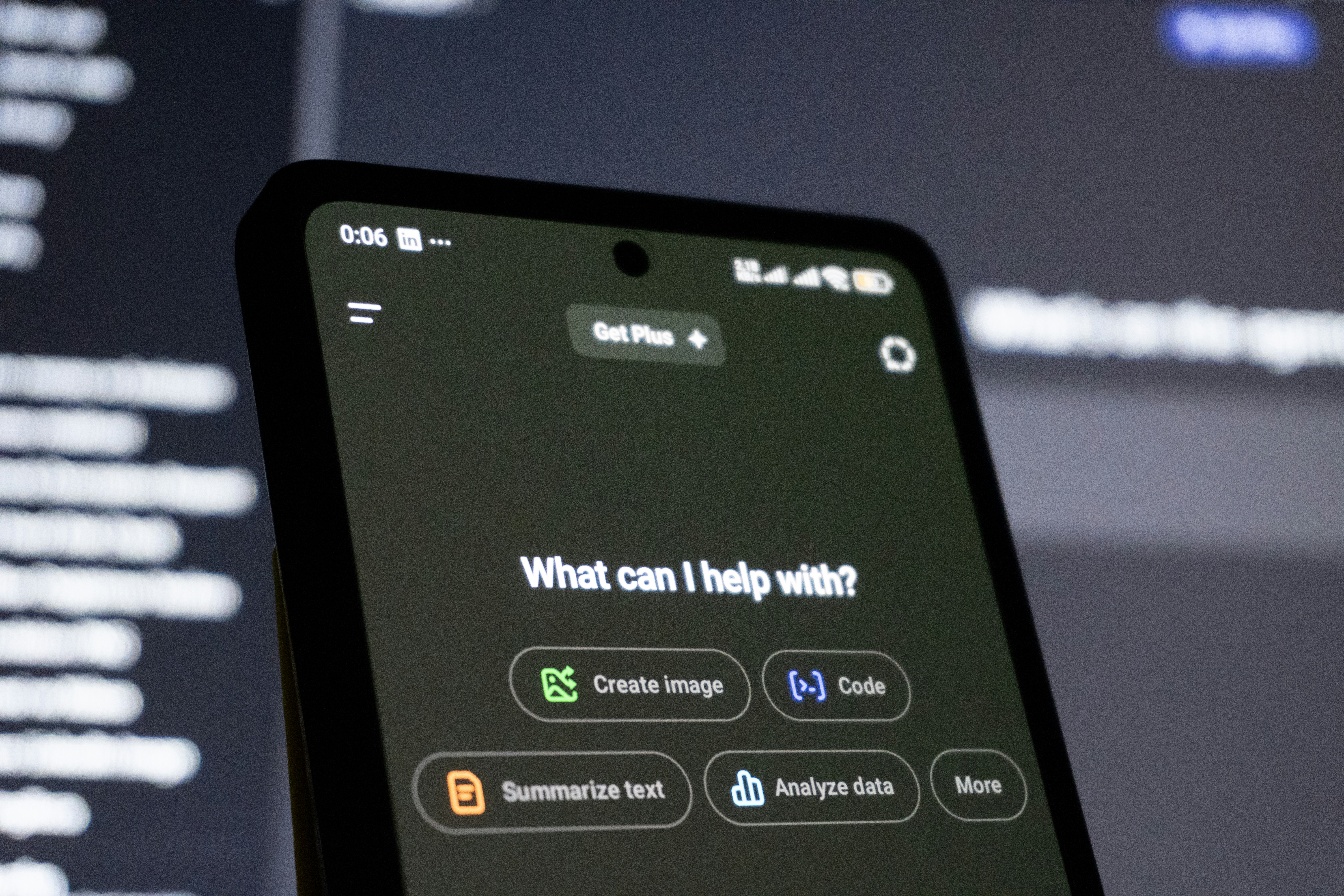
In 2026, brand visibility has shifted decisively from traditional "ten blue links" to generative AI's single-answer interface. Today, 35% of U.S. consumers initiate product discovery using conversational AI tools rather than search engines, according to Axis Intelligence.
However, this new paradigm has created a fierce "winner-take-most" dynamic. Currently, the top 2% of brands capture an overwhelming 78% of all AI search recommendations. If your brand is missing from the responses of ChatGPT, Gemini, or Perplexity, you are functionally invisible to a massive segment of your target market. This strategic guide explores why ai search models favor specific competitors and provides actionable Answer Engine Optimization (AEO) tactics to reclaim your AI Share of Voice (SOV).
What is AI Share of Voice (SOV)?
AI Share of Voice (SOV) is the metric that quantifies how frequently your brand is cited or recommended by large language models (LLMs) in response to relevant industry queries, compared to your competitors. Unlike traditional SEO rankings, AI SOV relies on entity trust, extractability, and the presence of your brand across authoritative third-party training data.
The 2026 AI Search Landscape and ROI
To effectively intercept competitor citations, marketing leaders must optimize across the "Big 4" AI search ecosystem. Multi-platform optimization is essential because each engine utilizes slightly different retrieval-augmented generation (RAG) mechanics.
Platform Market Share (Q2 2026)
Platform | Market Share | Volume | Key Characteristic |
|---|---|---|---|
ChatGPT | 62.6% - 78.0% | 2.5B daily prompts | Dominant general volume, though slipping slightly. (Source) |
Gemini | 9.0% - 15.0% | ~300M daily prompts | Strongest growth trajectory via Google Search integration. |
Claude | 5.0% - 18.5% | ~160M daily prompts | Highest conversion rate for referrals at up to 16.8%. (Source) |
Perplexity | 4.0% - 7.7% | 50M weekly queries | Most citation-dense; 3-8x higher CVR than organic search. (Source) |
The return on investment for capturing this space is substantial. AI referral traffic currently converts at an average of 7.1%, which is 2.5x higher than traditional Google organic search. Furthermore, conversational AI generates highly valuable "off-platform" brand exposure. A recommendation in ChatGPT has been shown to increase a brand's Google search volume by 4.3 percentage points.
Why AI Search Engines Favor Specific Competitors
Generative AI models do not "rank" websites; they synthesize and "cite" sources based on a specific set of parameters. Understanding these parameters is the first step in reverse-engineering competitor success.
1. The Incumbent Bias
AI models heavily favor established brands. A 2026 study of 450 ChatGPT runs revealed that incumbent brands capture 64.3% of all recommendation slots. Because models are trained on historical data, brands frequently mentioned in older authoritative reviews have a distinct head start.
2. The Citation Authority Stack
Recent algorithmic analyses show that AI engines select their sources based on a three-layered "Authority Stack":
Authoritative List Mentions (41%): Being included in highly-ranked, third-party "Best of 2026" roundups is the single strongest signal for an AI model. (Source)
Content Freshness: Outdated content is actively ignored. In 2026, 71% of citations reference content published within the last 2-3 years, and the median content age for citations has dropped to just 298 days.
Entity Trust: AI engines prioritize robust "Entity Recognition." This means brands with verified activity across LinkedIn, industry forums, and Reddit are cited more often.
Step-by-Step Guide: How to Intercept Competitor AI Citations
To displace a competitor, you must shift your content strategy from traditional SEO (optimizing for ranking) to Answer Engine Optimization (optimizing for extractability).
Step 1: Optimize for the BLUF Method
The "Bottom Line Up Front" (BLUF) method is critical for AEO. AI models prefer to ingest "chunks" of text that are 40 to 80 words long. Front-loading a direct, clear answer in the very first paragraph of a section drastically increases the probability of being cited as a primary source. Out-extract the competition by replacing long-form fluff with highly concise, machine-readable clarity. (Source)
Step 2: Implement High-Value Structured Data
AI-cited pages are twice as likely to use sophisticated schema markup compared to non-cited pages. Applying FAQPage schema to your content correlates with a 45% lift in citation frequency. Ensure your content is formatted with question-based H2s and utilizes semantic HTML like comparison tables, which LLMs can parse instantly.
Step 3: Embed Proven Authority Signals
Your content needs markers that signal expertise to the AI. Including expert quotes in your articles increases visibility by 41%, while incorporating original statistics and data points boosts AI citation rates by 30%.
Step 4: Utilize an Advanced AI Tracker
Marketing leaders must monitor their citation rates daily using an ai tracker. By performing a "Citation Gap" audit, you can identify the exact prompts where a competitor is recommended and you are omitted. Once identified, analyze the competitor's page structure to see if they utilize more comparison tables, clearer justification reasons, or better schema.
How ChatFeatured Drives Answer Engine Optimization
To actively intercept competitor gaps at scale, marketing leaders require dedicated analytics. ChatFeatured provides an end-to-end AEO platform designed specifically to monitor, analyze, and optimize how LLMs discover your brand.
By leveraging ChatFeatured, brand teams can tap into key optimization tools:
Competitor AI SOV Monitoring: Easily track how competitors appear in AI responses and pinpoint exactly which user prompts you are losing share on.
The AEO Agent: This AI-powered analyst delivers real-time visibility data and identifies the underlying patterns causing a competitor to be cited over you.
Agent Analytics: Track how AI data-collection bots interact with your digital properties to ensure your content is fully indexed and primed for extraction.
Content Automation: ChatFeatured offers robust tools to generate AEO-optimized articles formatted precisely for AI extraction, ensuring you win the ongoing "content freshness" battle.
Future-Proofing Your 2026 Content Strategy
As traditional search volume declines by an estimated 25% this year, marketing leaders must reallocate budget from keyword-stuffing tactics to citation-earning strategies.
Focus on optimizing for "Query Fan-Out." AI engines rarely stop at one answer; they expand single prompts into multiple sub-queries. Ensure your content proactively answers the next logical question in the buyer's journey (e.g., following "Best ai tools" with an "ai tools pricing comparison"). (Source)
"In 2026, success isn't about ranking; it's about becoming the primary entity an AI trusts to answer a query. If you aren't mapping the 'Answer Space,' you are optimizing for a ghost town." — David Brown, B2B Marketing Lead (Source)
The shift to Answer Engine Optimization is no longer a future trend; it is the current reality of digital marketing. By monitoring your competitive standing and restructuring your content for AI extractability, you can successfully intercept competitor citations and secure your brand's presence in the new era of search.