
Google Gemini AEO Guide: How to Get Your Brand Cited in Gemini & Google AI Overviews
Master the art of Answer Engine Optimization to secure your brand's presence in Google AI Overviews. Learn the technical architecture behind Gemini AI citations and drive high-intent traffic to your site.
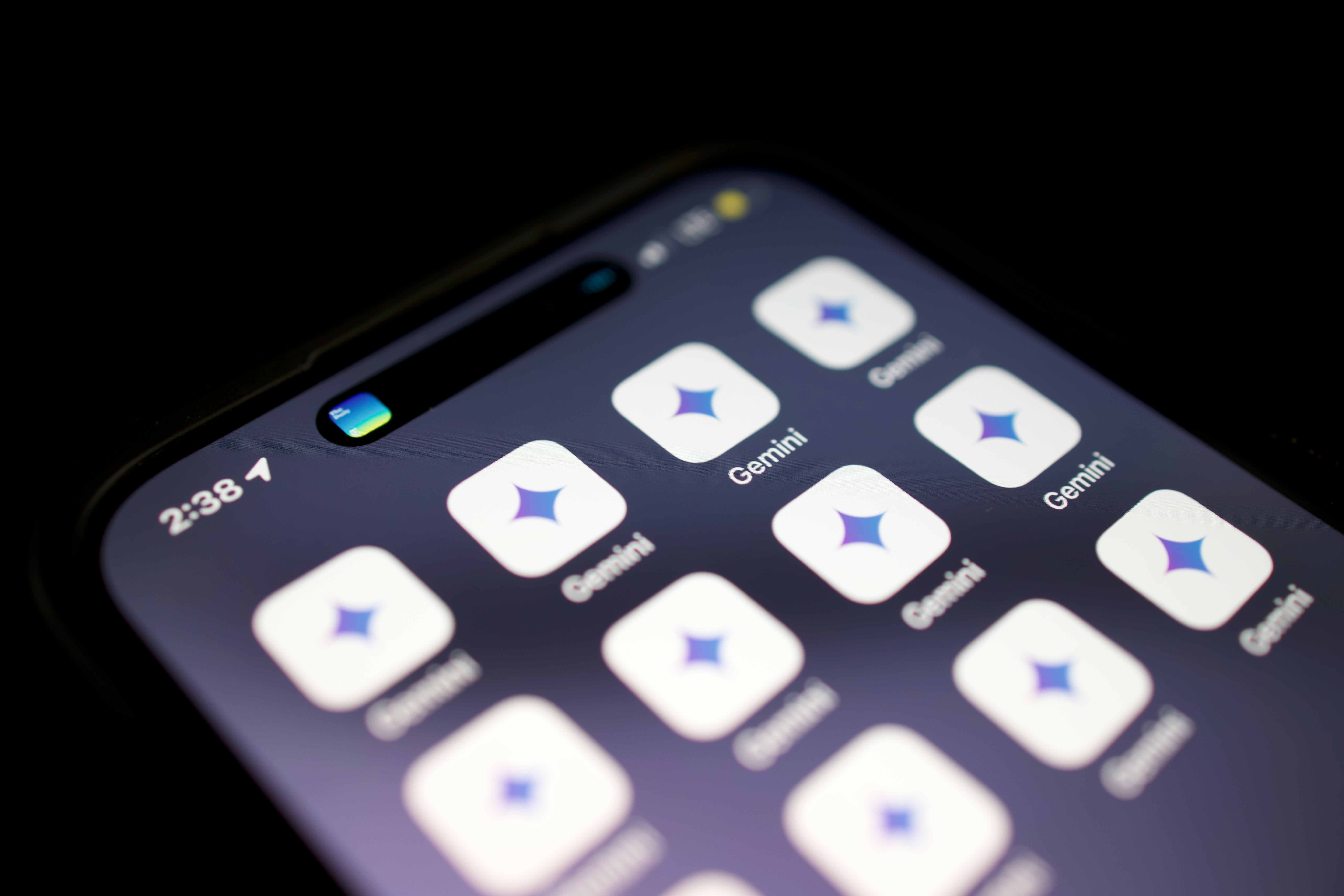
As of 2026, the integration of generative AI into search has fundamentally shifted how users discover brands and consume information online. With Google AI Overviews now appearing on 47% to over 60% of all informational queries in the US, according to research shared by BrightEdge and Link Building Journal, securing brand visibility requires more than traditional SEO. When users query Gemini AI or interact with AI-generated answers on Google, the underlying algorithms do not simply retrieve the highest-ranking web pages; they synthesize and cite highly structured, entity-dense information.
For digital marketing teams, understanding how AI search engines retrieve, evaluate, and cite sources is critical to capturing high-intent traffic and avoiding the steep organic traffic drop-offs associated with non-cited content. This comprehensive guide outlines the exact technical architecture behind Google AI search and provides a step-by-step roadmap to engineer your content for maximum citation readiness.
What is Google AI Search Answer Engine Optimization (AEO)?
Answer Engine Optimization (AEO) for Google AI search is the process of structuring digital content specifically for extraction and citation by Google's generative retrieval pipelines. Unlike traditional SEO, which optimizes for document-level ranking and domain authority, AEO focuses on passage-level fitness, entity relationships, and immediate factual retrieval.
The urgency for AEO in 2026 is driven by massive shifts in click-through rates (CTR). A comprehensive study by Seer Interactive analyzing 25.1 million impressions found that traditional organic CTR plummeted by 61% when AI Overviews were present on the SERP, as cited by ZipTie.dev. Furthermore, brands that fail to earn citations on AI-impacted queries suffer an average organic CTR drop of 34.5%. Conversely, successfully cited brands experience a 35% increase in organic clicks from branded searches, creating a self-reinforcing flywheel of visibility.
How Does Gemini AI Retrieve and Evaluate Brand Sources?
To engineer content for citation, you must first understand the multi-layered retrieval architecture that powers Google's AI capabilities. Google does not generate answers purely from LLM memory. Instead, it relies on a sophisticated Retrieval-Augmented Generation (RAG) pipeline to ensure factual accuracy.
The citation selection process follows a distinct funnel:
Query Fan-Out Expansion: When a user enters a prompt, the model deconstructs it into dozens of concurrent sub-queries covering related intents and entities. According to Cory Maki, an initial user prompt averages 70–80 words behind the scenes as Google fans it out.
Real-Time Index Retrieval: The system retrieves roughly 500,000 initial page candidates.
E-E-A-T Binary Quality Gate: A strict filter eliminates sites lacking Experience, Expertise, Authoritativeness, and Trustworthiness. ZipTie.dev reports that 96% of all Google AI Overview citations come from websites that pass this automated threshold.
Passage-Level Extraction: The model extracts roughly 1,000 highly relevant text blocks (passages) rather than evaluating entire pages.
Knowledge Graph Verification: Entities within the passages are cross-referenced against the Google Knowledge Graph to verify relationships.
Final Citation Synthesis: The model selects 3 to 8 sources to display alongside the generated response.
The Collapse of Traditional Rank Correlation
Ranking in the top 10 organic search results no longer guarantees an AI citation. By Q1 2026, research across 863,000 keywords demonstrated that top-10 organic overlap with AI Overviews collapsed to just 38% (Link Building Journal). An astonishing 62% of cited pages originate from lower-ranking content, with 31% coming from positions outside the top 100 altogether.
Standalone AI Gemini vs. Google AI Overviews: What is the Difference?
A critical misconception is that Google AI Overviews and the standalone AI Gemini assistant use identical citation logic. A 2026 study by TechCognate revealed that citation overlap between the two platforms is only 32% for identical queries.
Google AI Overviews: Highly reliant on live web grounding. AI Overviews cite web sources in 97.9% of all answers, averaging 5.2 citations per response (Cite Solutions). They prioritize established topical authority and strict E-E-A-T adherence.
Standalone AI Gemini: Relies more heavily on pre-trained parametric memory, citing external web sources only 74.0% of the time. Standalone Gemini also exhibits a massive freshness bias, citing content published within the last 90 days in 44% of its answers.
Step-by-Step Guide: Optimizing for Google AI Citations
To build a reliable citation presence, digital marketing teams should follow this systematic five-step implementation roadmap.
Step 1: Establish Your AI Visibility Baselines
You cannot optimize what you do not measure. Begin by tracking your brand visibility, citation rates, and sentiment across Google's various AI surfaces. Identify high-priority informational prompts where your audience is asking procedural or definitional questions, as these trigger AI Overviews over 70% of the time.
To scale this effectively, marketing teams can use specialized platforms like ChatFeatured, an end-to-end Answer Engine Optimization (AEO) platform. Using ChatFeatured's Answer Engine Insights, brands can aggregate visibility scores across multiple engines, analyze competitive citation gaps, and pinpoint exactly which URLs are actively driving AI recommendations.
Step 2: Refactor Content for Passage Extractability
Google AI Overviews cite self-contained passages, not entire pages. Audit your top-traffic content and ensure it is formatted for frictionless LLM extraction.
Target Ideal Answer Lengths: Create self-contained, declarative "answer units" measuring exactly 134 to 167 words. Research by BulkMD highlights this length as the optimal size for passage-level algorithmic selection.
Use Semantic Topic Structure: Precede every answer unit with an explicit
<h2>or<h3>heading that perfectly matches the sub-queries generated during the query fan-out process.Be Direct: Start the passage with the definitive answer. Avoid introductory fluff or hedging language.
Step 3: Maximize Entity Density and Schema Markup
Structured data and entity density act as direct translation layers for AI parser components, making your content significantly easier to verify against Google's Knowledge Graph.
Maintain High Entity Density: Content that features 15+ recognized Knowledge Graph entities per 1,000 words yields a 4.8× higher citation selection probability.
Implement JSON-LD Schema: According to Link Building Journal, pages utilizing structured markup like
FAQPage,HowTo, andArticleare cited 2.3 times more frequently than pages without schema.Link to Authority Nodes: Use
sameAsschema properties to explicitly link brand references to verified Knowledge Graph nodes, such as Wikidata, Wikipedia, and official social channels.
Step 4: Deploy AI Bot Tracking and Accelerated Indexing
If Google's AI crawlers cannot index your updated passages, your AEO efforts will fall flat. Because standalone Gemini relies heavily on content updated within the last 90 days, ensuring rapid indexation is critical.
Traditional web analytics often fail to isolate specific AI crawler traffic. By implementing ChatFeatured Agent Analytics, brands can track real-time crawling behavior from bots like GoogleBot and GPTBot at the server level. Additionally, utilizing automated weekly index submissions allows new answer units to be ingested into AI search pipelines up to 10x faster than waiting for natural crawl cycles.
Step 5: Diversify with Multimodal and Alternative Surfaces
Google AI search increasingly sources citations from non-traditional web domains, rich media, and user-generated content (UGC).
Integrate YouTube Assets: YouTube is currently the most-cited domain in Google AI Overviews, commanding a 29.5% overall citation share. Embedding relevant, well-optimized YouTube videos on your core pages provides an alternative pathway to secure a citation.
Monitor UGC Platforms: Following massive indexing agreements, Reddit citations within AI Overviews surged by 450% over a three-month window in 2026. Maintaining active, helpful brand presences in community forums can indirectly influence your AI footprint.
Summary: Traditional SEO vs. Answer Engine Optimization
The mechanics of securing a citation differ fundamentally from traditional ranking factors. The table below illustrates the shift in strategy required for 2026:
Optimization Dimension | Traditional Organic Search (SEO) | Google AI Overviews & Gemini (AEO) |
|---|---|---|
Primary Unit of Selection | Entire Web Page | Self-contained Passages (134–167 words) |
Primary Ranking Signal | Backlinks & Domain Authority | Passage Fitness, Schema & E-E-A-T |
Top-10 Rank Overlap | N/A (100% by definition) | 38% (62% sourced outside top 10) |
Schema Impact | Indirect / CTR Lift | 2.3x higher citation probability |
Conclusion
Optimizing for Gemini AI and broader Google AI search interfaces requires a fundamental shift from document-level SEO to passage-level AEO. By focusing on semantic structure, 134-167 word extractable passages, high entity density, and rigorous structured data, brands can bypass traditional organic ranking barriers. As AI search engines continue to dominate query volume in 2026, implementing a proactive, analytics-driven Answer Engine Optimization strategy is the definitive way to future-proof your digital visibility and secure your position as a trusted, cited authority.