
Future of Search: Why 2026 is the Year AI Answers Replace Blue Links
The era of ten blue links is over. In 2026, AI search models like ChatGPT and Gemini prioritize direct answers over website clicks. Learn how to adapt your brand strategy for the new age of Answer Engine Optimization (AEO).
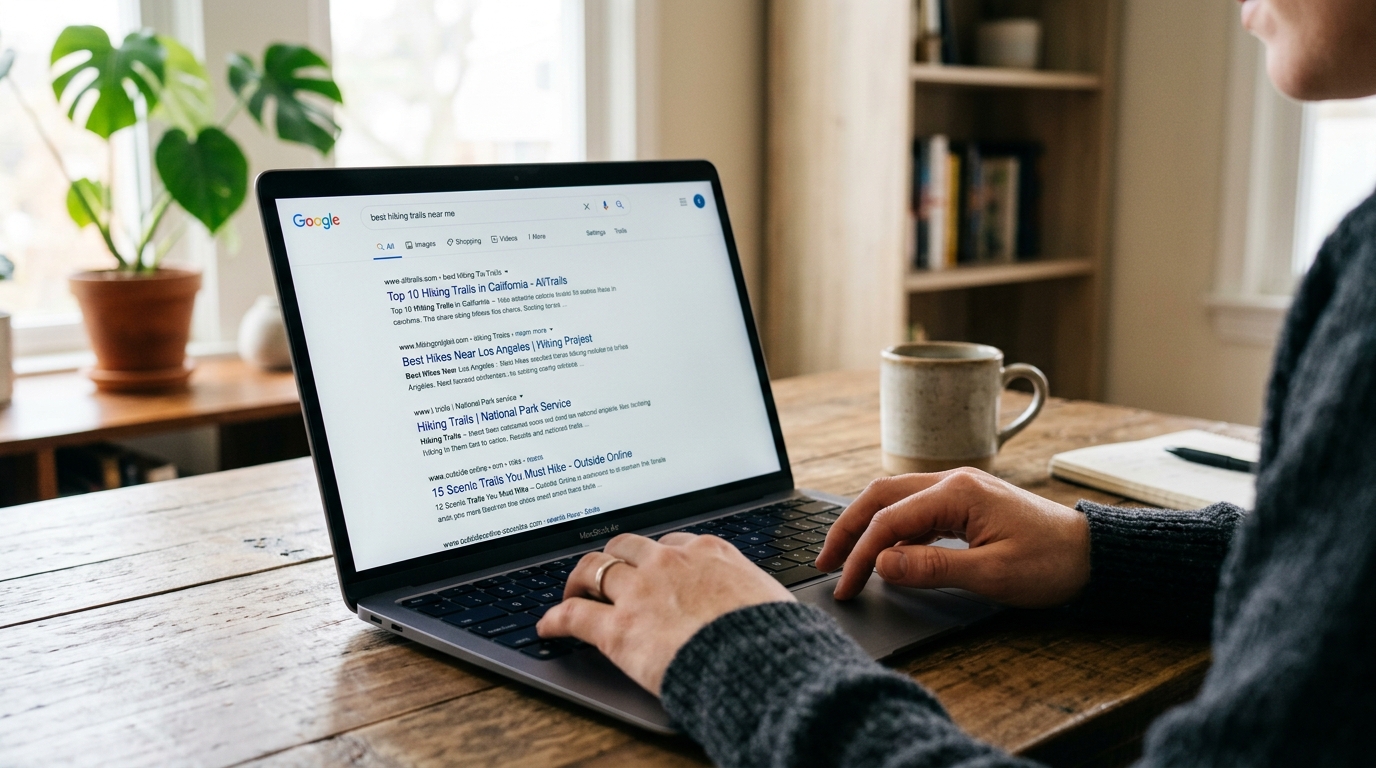
As of June 2026, the traditional search engine results page (SERP) has fundamentally fractured. The era of the "Ten Blue Links" is officially being superseded by synthesized responses from advanced AI models that prioritize immediate answers over website referrals. For digital marketers and brands, understanding this shift in AI search is no longer a futuristic exercise—it is an immediate operational necessity.
In 2026, brand visibility is no longer measured by clicks, but by citation share across the 'Big 4' AI engines: ChatGPT, Claude, Gemini, and Perplexity. This article explores the data driving the "Search Apocalypse," how AI models select their citations, and the strategies brands must adopt to survive the transition to Answer Engine Optimization (AEO).
What is the "Search Apocalypse" of 2026?
The "Search Apocalypse" refers to the rapid transition from a click-based web traffic model to a zero-click, citation-based answer model driven by generative AI. Instead of users clicking through multiple websites to compile information, AI agents now synthesize that information directly on the search interface.
Industry leaders have been vocal about this permanent shift. Following Google I/O 2026, CEO Sundar Pichai confirmed that search is becoming an "agent," not just an answer engine, noting that the new Gemini Spark platform is designed to "set off tasks, not just deliver results" (Aergos).
Similarly, Rand Fishkin, CEO of SparkToro, warns that "search optimization aimed at gaining traffic is now an extremely foolish thing to do," declaring that the "click era" has met its end (Seoul Economic Daily). Users no longer want to hunt for links; as BrightEdge CEO Jim Yu notes, they expect a "conversational, AI-led experience where answers and recommendations happen immediately" (The AI Economy).
The Data Behind the Shift to AI Search
The transition to AI-driven discovery is backed by staggering market data from recent months. The traditional SEO playbook is failing to capture modern user intent, as evidenced by the following 2026 statistics:
The Zero-Click Reality: Nearly 60% of U.S. Google searches now end without a single click to an external website, as AI Overviews (AIO) and "AI Mode" satisfy user intent directly on the search page (Invoca).
Market Fragmentation: While ChatGPT remains the dominant force with 54.7% of worldwide web-visit share, its lead is actively challenged by Google Gemini (27.4%) and Anthropic’s Claude (8.2%), the latter of which saw a massive 306% growth in a single quarter (Momentic Marketing).
The Rise of AI Discovery: AI-driven discovery now accounts for 17% of all branded discovery in B2B SaaS, up dramatically from just 4% in early 2025 (WinWithSEO).
Agentic Traffic Explosion: Traffic from AI agents—autonomous bots navigating the web to perform tasks for humans—has grown by 8,000% year-over-year (The Searchless Journal).
How AI Models Choose What to Cite
In 2026, the central question for brands has shifted from "How do I rank?" to "How do I get cited?"
The transition from SEO to AEO requires a shift from keyword density to entity authority and structured data corroboration. Research indicates that AI models do not simply cite the highest-ranking traditional web pages; instead, they favor highly structured, authoritative, and corroborated sources.
Source Concentration: A staggering 64% of all AI citations come from just three clusters: Wikipedia, Reddit, and primary-research domains (WinWithSEO).
The Authorship Signal: Content is judged heavily on its human expertise. Pages featuring a named, schema-marked author are cited 2.4x more often than anonymous content (WinWithSEO).
Cross-Surface Corroboration: AI models favor brands that are mentioned across multiple high-authority surfaces. A single blog post is no longer enough; brands must be corroborated across earned media, LinkedIn, YouTube, and industry forums (Triaza).
Transitioning from SEO to AEO with ChatFeatured
As the search landscape fractures across multiple AI platforms, managing brand visibility requires specialized tooling. ChatFeatured is the first end-to-end AEO platform that enables brands to optimize for the 'Google Zero' era, where AI answers satisfy 60% of user queries without a click.
Designed specifically for the realities of 2026, ChatFeatured provides a complete toolkit for teams dedicated to Answer Engine Optimization. The platform allows brands to track, analyze, and improve their presence across the entire fragmented ecosystem, including ChatGPT, Perplexity, Google AI, Gemini, Claude, and Grok.
To ensure content is actually ingested by these models, ChatFeatured's Agent Analytics monitors when AI crawlers visit a site and tracks exactly which pages they access. From there, the platform's AEO Agent acts as an AI-powered analyst, delivering actionable recommendations by comparing a brand's natural language visibility against competitors. Finally, teams can use the platform to create content that AI platforms actually cite, generating AEO-optimized articles perfectly structured for LLM extraction.
Conclusion: The Future of Brand Discovery
By mid-2026, the traditional SERP has been relegated to a secondary tool for deep-dive research. AI answer engines now handle the vast majority of informational and commercial-intent queries. For brands, the path to discovery runs directly through the training sets and retrieval-augmented generation (RAG) systems of AI models.
Adapting to AI search is no longer an experimental marketing tactic; it is the foundation of modern digital visibility. Platforms like ChatFeatured are no longer optional—they are the primary interface through which modern marketers must manage, measure, and optimize their brand's digital existence in a searchless world.