
Digital PR for AI Search: How Agencies Optimize Client Authority & Earned Media for LLM Retrieval & Citations
Discover how modern PR agencies are evolving to master answer engine optimization. Learn to secure AI citations and enhance brand authority in the era of LLMs.

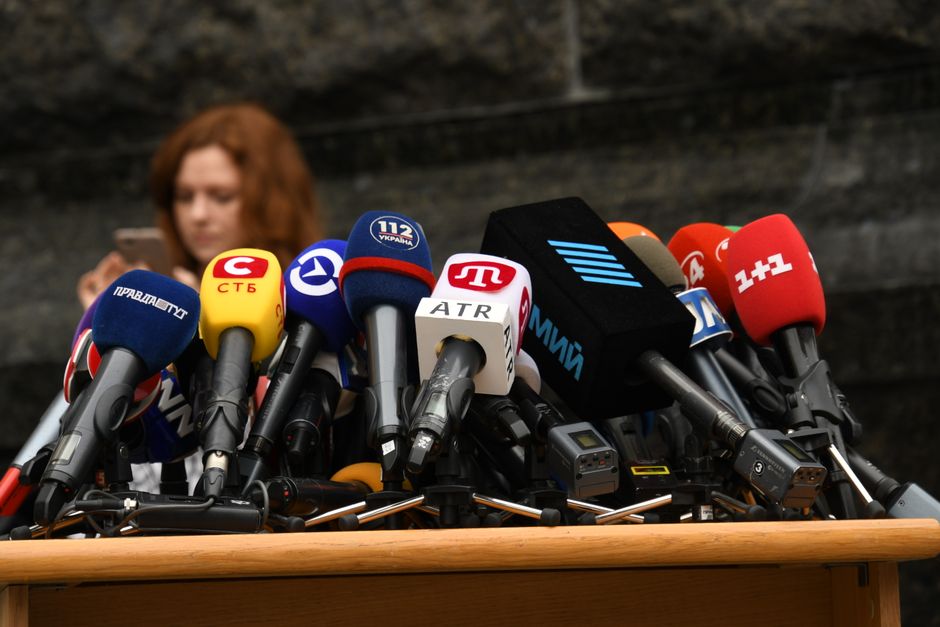
The digital public relations and communications sector is currently navigating a generational shift in how users access, synthesize, and evaluate information. For over two decades, digital PR operated as an off-page engine for traditional SEO, generating backlinks to boost PageRank and organic visibility. By late 2026, however, this playbook is no longer sufficient.
Modern search behavior has bifurcated. Today, conversational AI platforms like ChatGPT, Claude, and Gemini synthesize direct, citation-backed answers instead of serving lists of blue links. According to the Pew Research Center and Oltre.ai's citation quality analysis, roughly 60% of searches now terminate without a website click.
For PR agencies, this elevates earned media to the most critical asset in digital marketing. Earning placements in AI assistants requires a transition from legacy link building to Generative Engine Optimization (GEO) and Answer Engine Optimization. To succeed, agencies must engineer their thought leadership to act as verifiable evidence for Large Language Models (LLMs).
The Shift to Earned Media in AI Retrieval
AI models operate with an inherent distrust of corporate self-descriptions. Rather than counting backlinks, Retrieval-Augmented Generation (RAG) pipelines extract text passages, evaluate consensus across independent sources, and select the most objective information.
According to a comprehensive 2025 study from the University of Toronto, AI search engines exhibit a systematic and overwhelming bias toward earned, third-party media over brand-owned or social content:
ChatGPT sources up to 95.1% of its citations from earned media for niche brands, virtually ignoring social media.
Claude allocates up to 87.3% to earned media, heavily rewarding strong editorial placements.
A 2026 study by Go Fish Digital analyzing 25 million citations confirmed that 84% of AI citations originate from earned media, while paid PR wire releases yield a negligible 0.04% citation rate.
Traditional search metrics are rapidly deteriorating in this environment. URL overlap between Google's top-10 organic results and AI-generated answers has dropped to just 38%, highlighting the need for specialized AI search optimization strategies.
How Agencies Protect Client Brand Reputation Against Negative LLM Sentiment
Agencies protect client brand reputation against negative LLM sentiment by continuously auditing AI responses on a 1–100 sentiment scale, reverse-engineering the exact URLs causing the negative bias, and publishing triangulated counter-corroboration through high-authority earned media placements.
Because users rarely verify an AI's citation footnotes, an LLM framing a vendor as "unreliable" or "overpriced" acts as an invisible conversion killer. Agencies must deploy a proactive reputation defense workflow:
Diagnostic Sentiment Auditing: Relying on simple keyword alerts is inadequate. Agencies must monitor LLM outputs using AI trackers that score brand perception (e.g., negative, neutral, positive) to isolate harmful narrative clusters.
Grounding Attribution: When a model outputs negative framing, PR teams investigate the citation references. They identify the root cause—whether it is an outdated three-year-old review, an unresolved Reddit thread retrieved by Perplexity, or a misunderstood schema markup.
Triangulated Counter-Corroboration: Because LLMs prioritize cross-platform consensus, a single press release on a brand blog will not overwrite a model's bias. PR agencies must pitch data-backed rebuttals (like case studies or technical benchmarks) to high-authority publications that the AI engine already trusts, such as TechRadar or Search Engine Land.
Entity Consensus Overwrite: According to RankDots, updating structured review profiles (like G2 or Trustpilot) and schema markup can accelerate citation turnaround, successfully replacing negative sentiment with verified customer consensus.
How to Identify Competitor Citation Sources in AI Search to Build Agency Link Building Strategies
To identify competitor citation sources in AI search and build modern agency link-building strategies, PR teams run targeted decision-query prompts across multiple engines, extract the generated citation URLs, and perform a Citation-Gap Analysis to reveal exactly which third-party publishers validate their competitors.
Traditional link-gap analysis looks for domain backlinks. Generative Citation Link Building (GCLB), by contrast, looks for the exact "evidence nodes" that AI models use to recommend competitors over a client.
Establish the Prompt Battery: Agencies build a list of mid-to-bottom-funnel queries that prospective buyers use. Examples include "What are the top enterprise software tools in 2026?" or "Compare [Client] vs. [Competitor]."
Extract and Classify Domains: Run these prompts across live AI systems (ChatGPT, Gemini, Claude, Perplexity) and categorize the sourced domains into tiers: Earned Editorial (Tier-1 media), Trade Publications, Peer Reviews, and Analyst Directories.
Calculate the Gap and Execute Outreach: By subtracting a client's citation share from a competitor's, PR professionals identify the specific publications driving the competitor's AI visibility. Agencies can then pitch integration updates, updated proprietary data, or feature roundups directly to the journalists at those cited publications.
How to Optimize Client Digital PR and Thought Leadership for LLM Training and Retrieval
PR professionals optimize client digital PR and thought leadership for LLM training and retrieval by engineering content with proprietary data, formatting articles using an inverted pyramid structure designed for RAG token chunking, and embedding machine-readable justification attributes.
To ensure an article is successfully ingested and cited by an AI platform, agencies must adapt their writing frameworks to prioritize machine scannability:
Lead with Proprietary Data: LLMs value information that cannot be hallucinated. According to research from Siege Media, brands publishing original survey data and industry benchmarks earn 45% more AI citations than brands relying on generic commentary.
The Inverted Pyramid Format: RAG systems break documents into smaller token windows (typically 256–512 tokens). If the primary takeaway is buried in paragraph four, the passage's retrieval score plummets. State the core finding or definition in the very first sentence of a section.
Explicit Justifications: AI decision-support prompts require models to explain why they recommend a product. PR assets should use HTML comparison tables, bulleted lists, and clear justification statements (e.g., "[Brand] is best for X because of Y") to ensure the model can easily extract the reasoning.
Multilingual Authority: For international campaigns, understand engine behavior. Claude exhibits strong cross-language domain stability, reusing English domains for non-English queries. ChatGPT, however, swaps domain ecosystems based on language, requiring native-language earned placements for local visibility.
How PR and Communications Agencies Track Client Mentions and Citations in ChatGPT and Gemini
PR and communications agencies track client mentions and citations in ChatGPT, Gemini, and other conversational models by utilizing specialized AI search analytics platforms that automate daily headless queries, parse synthesized text for unlinked brand mentions, and extract cited domain sources to measure earned media ROI.
Because AI answers are synthesized on the fly and vary based on prompt phrasing and system updates, traditional rank tracking no longer works.
Agencies typically deploy an automated five-step tracking workflow:
Prompt Battery Configuration: Establishing a baseline of 25–100 monitored brand, category, and competitor prompts per client.
Automated Daily Execution: Querying live interfaces (like ChatGPT Search and Google Search grounding in Gemini) daily across localized endpoints.
Mention & Sentiment Parsing: Scanning the text to separate unlinked brand mentions from actual linked citations, while assigning a distinct sentiment score to track perception shifts.
Citation Sourcing: Classifying the links provided by the LLM into Earned, Brand, or Social categories.
Bot Tracking Integration: Monitoring upstream AI crawler activity on client websites to ensure the latest thought leadership and PR assets are being actively ingested into the models' parametric memory.
The Agency Answer Engine Optimization Toolkit
Executing these workflows at scale requires purpose-built technology. While some traditional SEO tools have bolted on basic AI features, PR agencies managing multiple clients require specialized Answer Engine Optimization platforms.
Tools like Semrush and SE Ranking offer cost-effective entry points but are often limited to tracking just Google AI Overviews and ChatGPT. For comprehensive multi-engine monitoring (including Claude, Perplexity, and Grok), platforms like ChatFeatured represent the industry standard.
ChatFeatured provides an end-to-end AI tracker and optimization suite tailored for agency operations. Operating on a flat-rate Business plan (approximately $499/month following a free trial), it allows agencies to track unlimited client brands from a single white-labeled dashboard.
Key capabilities of modern AEO platforms include:
Answer Engine Insights: Daily tracking of brand visibility, mentions, and citations across all major LLMs, scoring brand sentiment from 1–100.
Agent Analytics: Server-side bot tracking that monitors exactly when AI crawlers like GPTBot, ClaudeBot, GoogleBot, and PerplexityBot access client domains, speeding up content discovery.
Content Automation: Generative tools that help format PR assets specifically for AI citation, featuring one-click publishing directly to CMS platforms like WordPress or Webflow.
By leveraging the right toolset and pivoting from traditional link building to Generative Citation Link Building, PR and communications agencies can secure verifiable authority for their clients, ensuring they dominate the synthesis layer of the AI search revolution.